Sometime in the August heat of 1966, a woman named Ruby was giving birth. Somewhere in that heat, a man called Tom waited for his firstborn to arrive, and when that child arrived, he, too, would be called Tom. Somewhere else in 1966, Stephen King was getting drunk for the first time. These two events are (shocker) not related.
Sometime in March of 1974, a woman named Virginia was giving birth. Somewhere, a man called Tommy (Theodore) waited for yet another little child to join the bunch. That child would be called Jennifer.
Sometime, give or take a few days, about 30 years, 11 months, and three weeks ago, Jennifer was giving birth. Somewhere in her mind, she wanted to call the child Daniel, probably not after the Biblical Daniel, known for his loyalty to god. But the boy would be called Thomas. Probably for his father and grandfather, and not after the famous doubter amongst the apostles. While it may be apocryphal, my father (the second Tom in this little lineage) told me once that the first words my ears could have heard were, “uh oh.”
Meanwhile, sometime in the 70’s, Stephen King was putting pen to paper on The Shining. I’m not sure when I first saw Kubrick’s ‘adaptation’ of (one of) King’s masterwork(s), but it must have been very young. I think of those damn twins every time I turn a corner in a hotel. I had a copy of the book when I was younger, though I never read it. Maybe because, in the mass-market paperback format, it looked like a doorstop and had an ugly cover. Anyway, I figured this month I would dedicate myself to King like I did for a month last year. I thought it was time to finally see if the book lived up to the film.
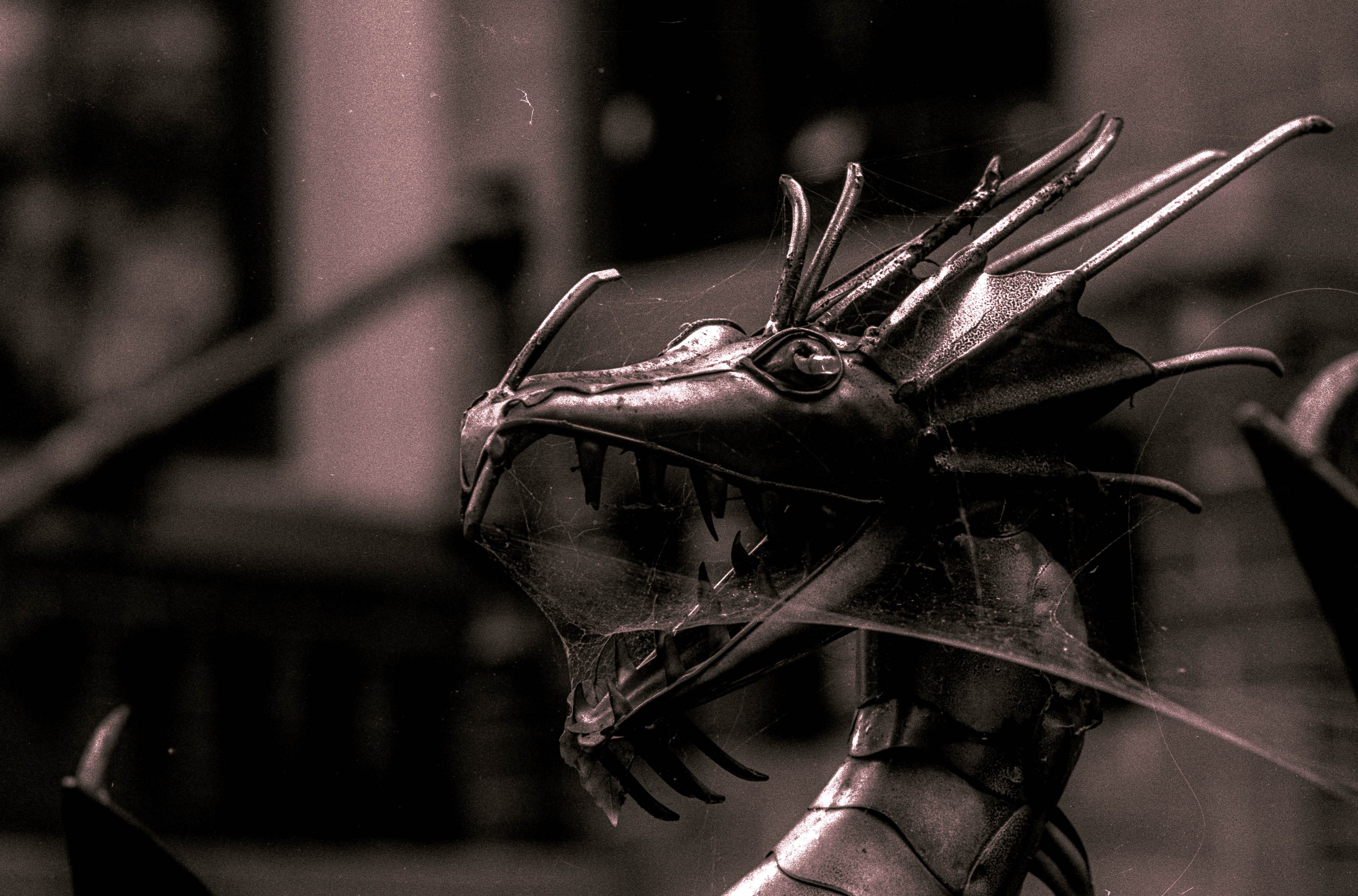
I inhaled the novel, and I’ll get it out of the way: it’s better than Kubrick’s film. The book is nearly 50 years old, and Kubrick’s film not far behind it, so I’m not sure how interesting reviews of them can be. Still, the Overlook reached out of the book and gripped me the whole way through. I wasn’t prepared for how true I found it. Little Danny watches the hotel seep into his father and shatter him in the freeze. The halls turn him from flawed-but-trying-hard dad into a Shape, stalking the halls, intent on bashing his son’s little brain in with a mallet. But what makes it so terrifying? We’ve all seen movies with a guy stalking some hopeless, soon-to-be victim. The scariest things in horror aren’t ghosts or ghouls, even if they are smiling and waterlogged corpses in hotel bathtubs. The terror is that any one of us could be haunted, could turn on those we love most (or they, on us) with pressure applied, just so. We can’t fathom it in our minds, we don’t want to—if we try, we shudder and shake.
Anyone with the social skills of a 2nd grader (and not even one trained by a pissed-off house) can tell three minutes into Kubrick’s film that Jack Nicholson’s Jack Torrance is an angry man. He’s visibly irritated, and his first interaction with his six-year-old son (five in the book) is to chastise him for being hungry on a long car ride. We only see Jack give that horrible grimace of a smile a minute later, as he describes the Donner party eating each other up (“they had to! in order to survive!”). He’s gleeful (and maybe that’s why we miss how poorly Nicholson mimes driving in this scene). In the book, we start with Jack Torrance in a job interview, and he’s a prickly guy. Yet, his first interaction with his son is to express concern, and we hear little Danny tell Jack how much he loves him, and Jack returns that. We like Jack on page 49. We see he’s a good father, right? We’ve almost forgotten that, a few pages earlier, we learned ol’ Jack yanked just a little too hard and snapped the kid’s arm like a wishbone.
Over the next 450 or so pages, we’re with Jack every step of the way as the Overlook haunts him. We have no power to reach in and shake him awake, and that is just what we want to do, because we know that somewhere deep in there is a desperate man who loves his son. Kubrick and Nicholson want to see the Hotel come alive through Jack; they aren’t interested in a desperate man losing a struggle. We don’t care if Kubrick’s Torrance lives. In fact, we’d like him to die. When the film ends and we see Torrance the Icicle, we don’t feel a good man has been swallowed up, or that things could have worked out differently. We think, “he got what he deserved.”
Is that the most interesting story out there? Bad man bites it in the end? Sure, they can be fun tales, and there are folks out there that I’d be giddy to see get their just rewards. But are their stories going on my top shelf?

I worried that King would undermine The Shining in his 2013 revisit Doctor Sleep. If I worried, having only read the book a week prior, I can’t imagine what folks who’d been reading the thing for their entire lives felt. At some point in the past few years, I watched Mike Flanagan’s 2019 adaptation of the book, and while I (according to Letterboxd) thought it was fine, I couldn’t remember it. Small blessings, each part of the book unfolds with surprises, suspense, and satisfaction. I opened on page 1 (3) a skeptic. On page 528, I left satisfied and with a sniffle. Readers of my reviews know that I am a crier, and it doesn’t take much for a book or film to make me shed a tear, but I felt that I knew Dan/ny on a much deeper level than other King characters over the years. It all felt familiar, and true. Familiarity with a book about a kid whose father chases him and his mom around with a hammer, trying to beat them to death? With a book where the kid has grown up to be 30something, a bit of a fuckup, and reckoning with that past, but which also features vampire-like creatures that kill kids and breathe in their “steam?” Okay, not so much the vampire parts.
Snatching $70 and hiding blow from a 2-year-old ends up being Dan’s rock bottom, where we find him at the beginning. That seemed a bit quaint, but then again, I can remember dear ol’ da persuading me to snatch my mom’s engagement ring so he could pawn it for a rock. I can remember the chemical smell rolling out of his bathroom, and I can remember washing burnt spoons when I was not all that much older than little Danny. Comparatively, Dan didn’t seem like he was doing nearly as badly as he could be.
Absent both the novel and film of The Shining (but not Stephen King’s The Shining mini-series, produced about 11 years into King’s sobriety in ‘96/’97), Alcoholics Anonymous is foundational in Doctor Sleep. AA culture and setting are so accurately written that we know the author must be either a chip-carrying member, treatment team tag-along, or some dork kid that had to sit in the kitchenette just outside the meeting room. King was the first, though those last two happen to be me. My dad gave AA a college try somewhere around 2007 or ‘08, and when I was living with him, I can remember him dragging me along (performatively, I suspect). I would sit in this little kitchen area on a barstool and smell the burnt coffee that must permeate every AA meeting in the country. I remember nothing at all about those nights, other than the green countertop and the black and white tile floor. And, of course, dad showing chips like they were treasures.
Years later, working in mental health and substance use treatment, I encountered a lot of AA and NA (Narcotics Anonymous) meetings and materials, and sat in on one or two open meetings to which I’d ferried inpatient folks. AA/NA has always felt a little culty, for me, and not exactly because of the Higher Power stuff. Folks can get very hardcore. I can understand why a person might grab on tight, though.
Dan’s sponsor, in Doctor Sleep: “For every seven alcoholics who walk through our doors, six walk back out again and get drunk. The seventh is the miracle we all live for.” I hope the next guy to walk through those doors was lucky number seven, because my dad wasn’t. And now we come to the place where fiction and reality show their distance: in the books, the Overlook’s haunted halls magnify and explode Jack’s insecurities and flaws. In the real world, all the ghosts are neatly tucked in those precious few inches between our ears, along with all the machinery that tells us how to breathe, how to eat, how to love, and how to hate. Both Danny and Dan wonder, at their different stages of life, what would have happened had the Torrance family not gone up the mountain that winter. Would it have been a better life?
King fans know that Ka is a wheel, or to put it in my dad’s parlance, what goes around comes around. The details may change, but outcomes? Maybe not. If wishing made it so. To my surprise, no one, not Jack, not Dick Hallorann, and not Dan the man himself utters anywhere in either book one of my favorite Kingisms on wishful thinking: ‘Wish in one hand, spit (for the civilized) in the other. See which one fills up first.’ It’s never stopped me from yearning, though.
“There came a time when you realized that moving on was pointless. That you took yourself with you wherever you went,” Dan thinks early on in Doctor Sleep. Where have we heard that before? Ah, that other famous haunted drinker, Hemingway: “…going to another country doesn’t make any difference. I’ve tried all that. You can’t get away from yourself by moving from one place to another. There’s nothing to that” (from The Sun Also Rises).
Jack’s father haunts him, it’s that man speaking ghostly over the Overlook’s radio, “‘You have to kill him, Jacky, and her too…’” Jack erupts, “‘You’re dead . . . you’re not in me at all!’ Because he had cut all the father out of him and it was not right that he should come back” (The Shining, pg 335, bold mine). In turn, Jack haunts his son. The fear that he will become his father terrifies Dan. I’m afraid, too. “God knew he [Dan] didn’t want to be his father, whose bouts of sobriety had been the white-knuckle kind. AA was supposed to help with anger, and mostly it did, but there were times like tonight when Dan realized what a flimsy barrier it was. Times when he felt worthless, and the booze seemed like all he deserved. At times like that he felt very close to his father” (Doctor Sleep, pg 144).
Jack’s eruption in The Shining seals the Torrances’ fate. Dan has a similar eruption, rejecting his inheritance, in Doctor Sleep. It roiled off the page and through my body when Dan shouts, “I am not my father!” King doesn’t write that Dan cried when he said this, but I know it to be true, as true as a work of fiction can be.

Both Dan and Abra, the deuteragonist of Doctor Sleep, have and talk about dreams. Has it been more than a decade since I’ve seen my father? That sounds right, and yet I see his ghost in my dreams frequently. I say his ghost, though, as far as I know, he is still alive. Reading Doctor Sleep, my acid-hatred of the man felt sickly, and I tried to imagine my father in one of those church basement AA meetings. “How much of his father’s son was he?” Dan asks himself. I wonder if my father had the same, sometimes paralyzing fears that I have. I wonder how much more pressure could have been on him, with two kids and a wife, than there is on me at a close-enough age. I wonder what ghosts haunted his mind and dreams, and if the burning metal fumes drove them off at all.
A better person might tell you that they read King’s novel and came away with some deeply impactful, life-changing view of their father and their lineage. Not me. In a dream last week, in which even to stop my dream-father from hearing the name of someone I know today, I flipped a car and then wrapped my hands around his throat, madly shouting and hoping to pop his skull right through his scalp. I woke up from that dream on my couch, sweaty, and talking as if there was still someone there to hear it. Would you believe that someone once described me as even-keeled?
In the early pages of Doctor Sleep, Dan has an experience that he knows, while living it, will haunt him. He tries to lock it away in the depths of his mind, where it might never hurt again. “No, honey. Maybe you can put the things from the Overlook away in lockboxes, but not memories. Never those. They’re the real ghosts” (pg 45).
Real ghosts haunt us.
Their weight pushes down on our heads, compresses space, and pulls time. Minutes turn to hours, and the walls close in. The bad ones exhaust us while keeping us from sleep. The worst of them slither into our ears, whispering stories. We struggle not to believe their tales of invisibility, burden, and pity. They are our chaperones on little forays into real memories and phantom pains.
(We in the business call these NEGATIVE THOUGHTS, and we hope they don’t escalate to DISORDERED THINKING.)
In the midst of such thoughts, it can be hard to balance. Different people have different strategies. Walking, painting, tinkering, reading. Growing up, King’s novels provided me space to be somewhere else, someone else, for a little while. The horrors in them were neatly contained between two flaps and so many little spots of ink. Once the story is over, you close the book, put it on a shelf, and you’re free. Life is not that way. Nothing ever truly ends. With effort, we might learn to let those thoughts fly over our heads, though in my experience, this is a skill that grows and erodes and takes effort to maintain, like a garden in the mind. Sometimes I think about how unending some things seem, immune to time, and the idea that they will be with me forever is enough to lay me out. Other times, I try to find comfort in it, because outside of a book, the scariest thing in the world is the end.
Thomas

Want to see my photos from the No Kings protest in Washington, DC? You can find them here.